Metamodern Psychoanalysis and Parallel Identities
Vladimir Nemet
1. Introduction
Today I am once again trying to connect the theory of parallel identities with contemporary philosophy.
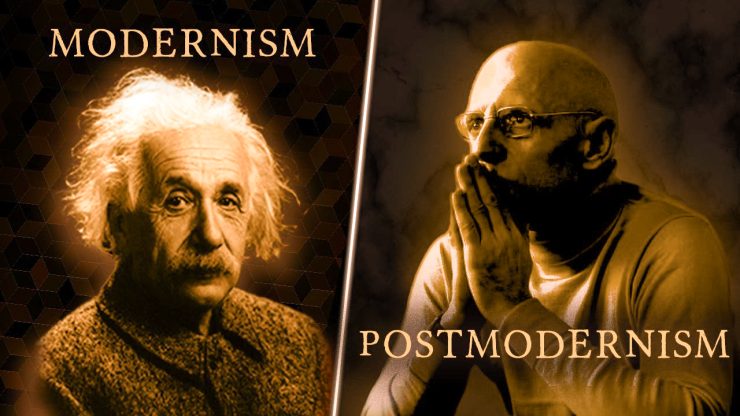
So I ask myself: to which philosophical direction does my theory of parallel identities actually belong? Is it perhaps the philosophy of modernism, or maybe the philosophy of deconstruction that we call postmodernism?
On the one hand, this theory does not accept the optimism of modernism, which believes in progress through the ideals of science, technology, and reason as forces that can fundamentally improve the world. In that sense, parallel identities cannot be placed within the modernist horizon.
On the other hand, my theory also does not fit into postmodernism, because it does not wish to reject the idea of large and stable structures, the so-called metanarratives. On the contrary, it presupposes the existence of firm and stable relational points, such as the Significant Other, which cannot and should not be deconstructed.
This therefore raises the question: is there even a philosophical framework to which the theory of parallel identities belongs?
My answer is that such a framework does exist, and it is the philosophy of metamodernism.
In this lecture, I will try to show how this philosophical direction — metamodernism — can be simply connected with the theory of parallel identities.
2. Postmodernism
To begin with, a few words about postmodernism and why this philosophical framework is no longer sufficient today.
Postmodernism played an important historical role. It revealed the instability of metanarratives and grand signifiers, showed how identity is shaped through language, discourse, and social structures, and opened space for a plurality of perspectives. In doing so, it freed humanity from the illusion of a single absolute truth and enabled greater sensitivity to the diversity of human experience.
But precisely where postmodernism was strongest, we also find its limitations — especially in the field of psychotherapy and human relationships.
If every feeling, every relationship, and every inner experience is primarily viewed as a construction or interpretative framework, then experience itself gradually loses its weight. The encounter between the I and the Thou is no longer an event that transforms us, but becomes an analysis of an event. Instead of presence, distance appears; instead of relation, interpretation of relation.
And it is precisely this living presence of Otherness that is most important in psychotherapy. In the encounter between two people, something affective and powerful emerges — something that transcends analysis itself.
Within the postmodern framework, phenomena such as idealization, transference, and emotional reality are often deconstructed too quickly. A strong relational experience is immediately translated into theoretical language, thereby reducing its emotional force.
Therefore, we are searching for a new philosophical framework that can simultaneously preserve awareness of the constructed nature of reality and the seriousness of experience itself. I recognize this possibility precisely in the philosophy of metamodernism — a philosophy that does not choose between irony and sincerity, distance and engagement, deconstruction and idealization, but instead attempts to live this paradox simultaneously.
3. The Return of the Big Other
Let us now look at how three philosophers who strongly shaped postmodern thought speak about the phenomenon of Otherness: Jacques Lacan, Martin Heidegger, and Emmanuel Levinas.
In Lacan and Heidegger, the subject and the Other are structured through the symbolic order of language. The Significant Other is no longer a fully present person in relational immediacy, but a place within the horizon of Being-in-the-world. The focus is no longer on the affective dynamics of encounter, but on the way Being is revealed through human existence. In this way, the experience of the Other is shifted from a living relational space into a more abstract field of ontology. Idealization is no longer an event of relation, but a secondary structure of understanding Being.
The consequence is a certain loss of phenomenological intensity of idealization. What is alive and emotionally powerful in clinical experience is translated either into the structure of language or into the structure of Being. The relational energy of encounter gradually dissolves within a theoretical framework that tries to explain it.
Emmanuel Levinas
In contrast, Emmanuel Levinas returns the Other as an ethically primary event. The Other is not reducible to language or ontology. The Other appears as a face that calls me, interrupts my self-absorption, and ethically obliges me. In this way, something resembling a metanarrative of Otherness is re-established: the Other is not merely a construction or an effect of discourse, but a real presence that precedes every system of explanation.
For this reason, Levinas does not belong to the postmodern horizon of thought. He does not reduce the experience of Otherness to language, symbolic systems, or ontological structures, but allows the Other to act from its own ethical position. In this sense, Levinas opens space for something that will later become important for metamodernism as well — the possibility of rediscovering the significance of the Other and the power of ideals. He can therefore be seen as an important precursor of the metamodern sensibility.
4. Fundamental Principles of Metamodernism
What is metamodernism?
Metamodernism emerged at the beginning of the 21st century as a response to the exhaustion of postmodernism, particularly after social crises that showed that irony, cynicism, and deconstruction are no longer sufficient to understand the world. The term was popularized by cultural theorists Timotheus Vermeulen and Robin van den Akker in a 2010 essay. They interpret metamodernism as an oscillation between modernist hope and postmodern skepticism. Instead of deconstructing ideals, metamodernism attempts to re-establish sincerity, idealization, and the search for meaning, but without losing awareness of paradox, fragmentation, and the instability of reality.
The fundamental features of metamodernism include: oscillation between sincerity and irony, a return to ideals without a return to naivety, acceptance of paradox as a structure of experience, affective seriousness despite epistemological uncertainty, and a temporary affirmation of metanarratives. In short: it is the capacity to endure contradiction without psychic fragmentation.
Metamodernism does not cancel postmodern critique, but refuses to accept its finality as the last truth about human beings and the world. It reopens space for fundamental human experiences — the Significant Other, the relation of I and Thou, meaning, idealization, and ethics — but without returning to psychological regression or naive belief in absolute truths. It could therefore be described quite simply as a religious feeling without religion — an attempt to once again feel depth, presence, and sacredness of experience, but without dogmatic closure.
5. Similarities with the Theory of Parallel Identities
From this perspective, my theory of parallel identities can be understood as a psychological version of metamodern thinking. It is based on the idea that the subject consists of two firm and stable structures, two absolutes that cannot and must not be deconstructed.
Within this framework, the I and the Other are not in a simple oppositional relation, but in a parallel coexistence: the I as a center of experience, and the Thou as a center of experience.
This is a situation of paradox — the existence of two absolute truths, without the need to eliminate either position.
The similarity with metamodernism lies precisely in this capacity to sustain paradox without resolving it. Identity is not synthesis, but an oscillating field of perspectives.
6. Metamodern Psychoanalysis: Affirmation of Metanarratives without Deconstruction
As I have already mentioned, in postmodern psychoanalysis the emphasis is on deconstruction: transference is interpreted as projection, idealization as a defense mechanism, and relationship as a discursive construction.
On the other hand, metamodern psychoanalysis, which we are discussing here, assumes that psychic phenomena are not only constructions, but also real relational events. Otherness does not come to us through language, but through a real, living encounter.
Idealization is therefore not reduced to a perceptual error, but understood as a form of real encounter that has affective and phenomenological weight. Transference is not only an interpretative object, but a living relation occurring in the present of the therapeutic encounter.
In this sense, Levinas’ line of thought is reactivated: the Other is not reducible to language, as Lacan would say, nor to Being, as Heidegger would say, but appears as an ethical presence that transcends the system. The metanarrative of the Other returns as a legitimate structure of experience. Otherness is truly above us and ahead of us.
Metamodern psychoanalysis therefore does not abolish metanarratives, but reactivates them as living horizons: the Other is truly present, relation is a real event, idealization is a real experience, transference is a real relation.
But none of these elements is closed into a final interpretation; rather, each represents only one side of a paradox. And the fundamental paradox is the simultaneous existence of two great truths, the I and the Thou.
7. Conclusion
In conclusion, we can say that parallel identities, in the context of metamodernism, represents an attempt to restore the seriousness of relational experience after postmodern fragmentation.
Lacan and Heidegger shift the experience of Otherness into the structure of language and Being, thereby reducing its relational force and immediacy. Levinas restores the ethical absoluteness of the Other and reopens the space of the metanarrative of relation.
The theory of parallel identities functions in this framework as a psychological model through which this tension is sustained without the need for its resolution. The subject becomes a space of simultaneous perspectives, rather than a single point of identity.
Metamodernism does not eliminate the paradox between the I and the Other — it transforms it into the fundamental condition of subjectivity.
In this sense, the subject is no longer a problem to be solved, but a living tension of the relation between I and Thou. It is a space of encounter in which identity does not close, but continues to breathe between two presences — without the need for either of them to be abolished.
Literature:
Lacan, J. (2006). Écrits: The first complete edition in English (B. Fink, Trans.). W. W. Norton & Company. (Original work published 1966)
Heidegger, M. (1962). Being and time (J. Macquarrie & E. Robinson, Trans.). Blackwell. (Original work published 1927)
Levinas, E. (1969). Totality and infinity: An essay on exteriority (A. Lingis, Trans.). (Original work published 1961)
Vermeulen, T., & van den Akker, R. (2010). Notes on metamodernism
Robin van den Akker, R., Gibbons, A., & Vermeulen, T. (Eds.). (2017). Metamodernism: Historicity, affect, and depth after postmodernism